LNER
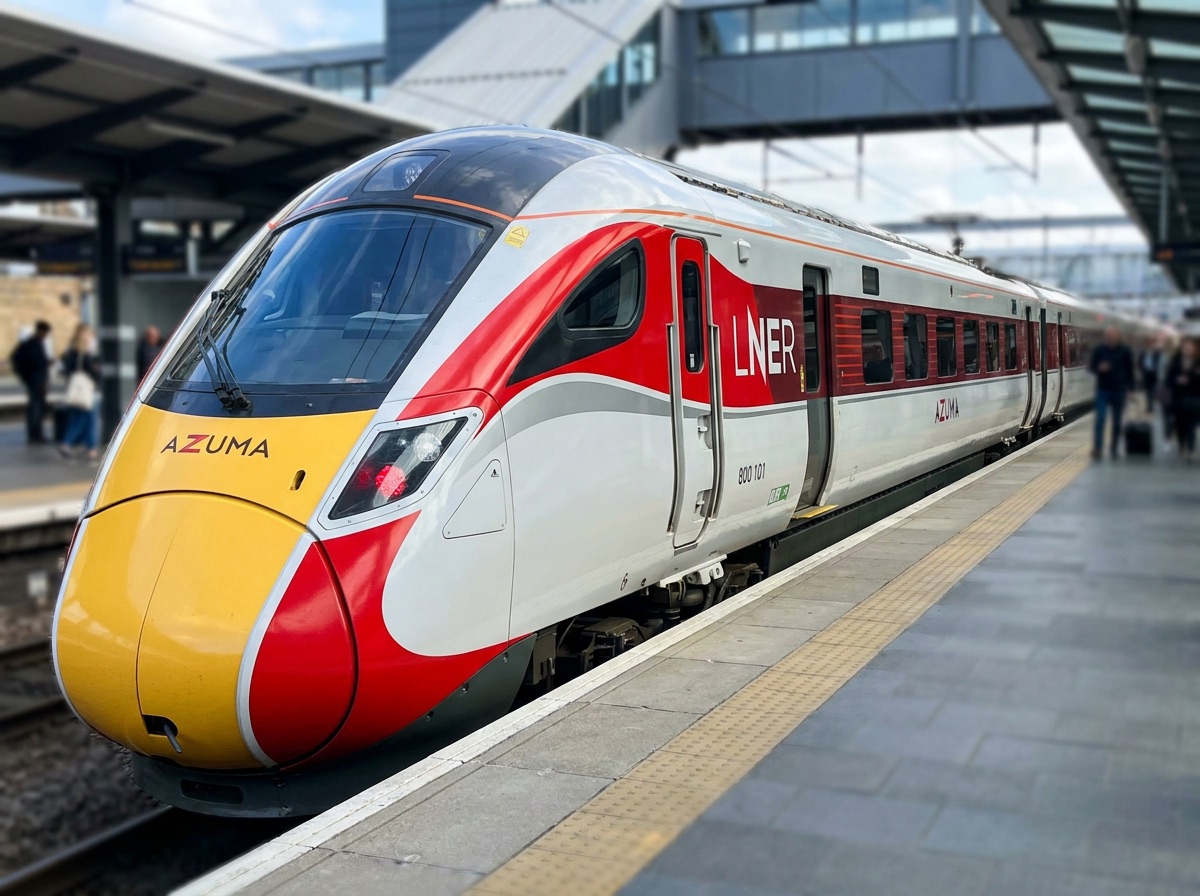
Runs the fast, frequent direct service between Edinburgh Waverley and London King's Cross aboard its Azuma fleet, in Standard and First Class.
Flagship serviceEast Coast — Waverley → King's Cross
View fares ↗
Edinburgh ⇄ London · Rail Travel
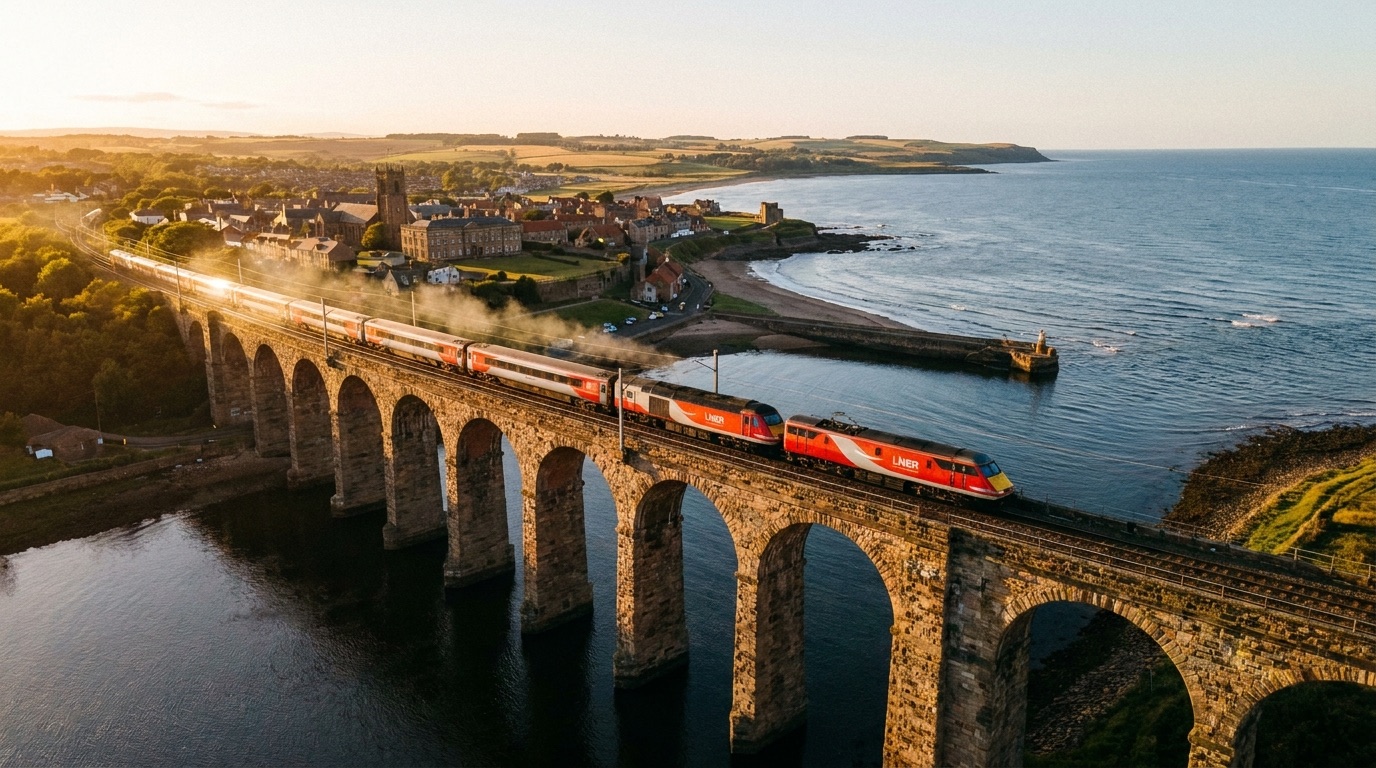
393 miles (632 km) of Britain's East Coast Main Line, from beneath Edinburgh Castle to the heart of London — every way to make the trip, compared honestly in one place.
Decision Time
Before you get into operators and classes, it's worth settling the bigger question: how should you actually make this trip? Here's how the train really stacks up against flying, the coach and driving yourself, city centre to city centre.
Train✓ Best overall | Plane | Coach / Bus | Car | |
|---|---|---|---|---|
| City-centre to city-centre | ~4h10–4h30, Waverley to King's Cross direct | ~1h20 flight, but +2–3 hrs for check-in, security and airport transfers each end | ~9.5–10.5 hrs | ~7.5–8.5 hrs, traffic dependent |
| Typical fare | Advance fares from around £30 one-way | From around £40, often far more close to departure | From around £20 one-way | Fuel, tolls, congestion charge and parking — no fixed fare |
| Where you arrive | City centre — King's Cross or Euston | Edinburgh & London airports, both well outside the centres | National Express coach (bus) terminal at Victoria, central London | Wherever your destination is, but central parking is scarce and pricey |
| Comfort | Full-size seat, room to walk around, table, reliable Wi-Fi | Cramped economy seating, security queues, nowhere to stretch | Reclining seat, no room to move, regular stops | Comfortable, but you're driving the entire way |
| CO₂ per passenger | Lowest of the four, by a wide margin | Highest of the four options | Low, but the slowest way to get there | High if you're travelling alone |
| Reliability | Very reliable; occasional weather or engineering disruption | Exposed to weather delays and air-traffic restrictions | Subject to road traffic and roadworks | Entirely dependent on traffic conditions |
For a city-centre-to-city-centre trip, the train usually wins on total door-to-door time once airport transfers are counted — and it's the lowest-carbon way to make the journey to your final destination, by a wide margin.
Travel Options
Same two cities, four very different journeys — pick the one that fits your schedule, your budget, or your appetite for a night on the rails.
By The Numbers
The infrastructure behind the journey, and the landmarks worth watching for along the way — laid out in the order you'll actually pass them.
Tap a card to flip it for more.
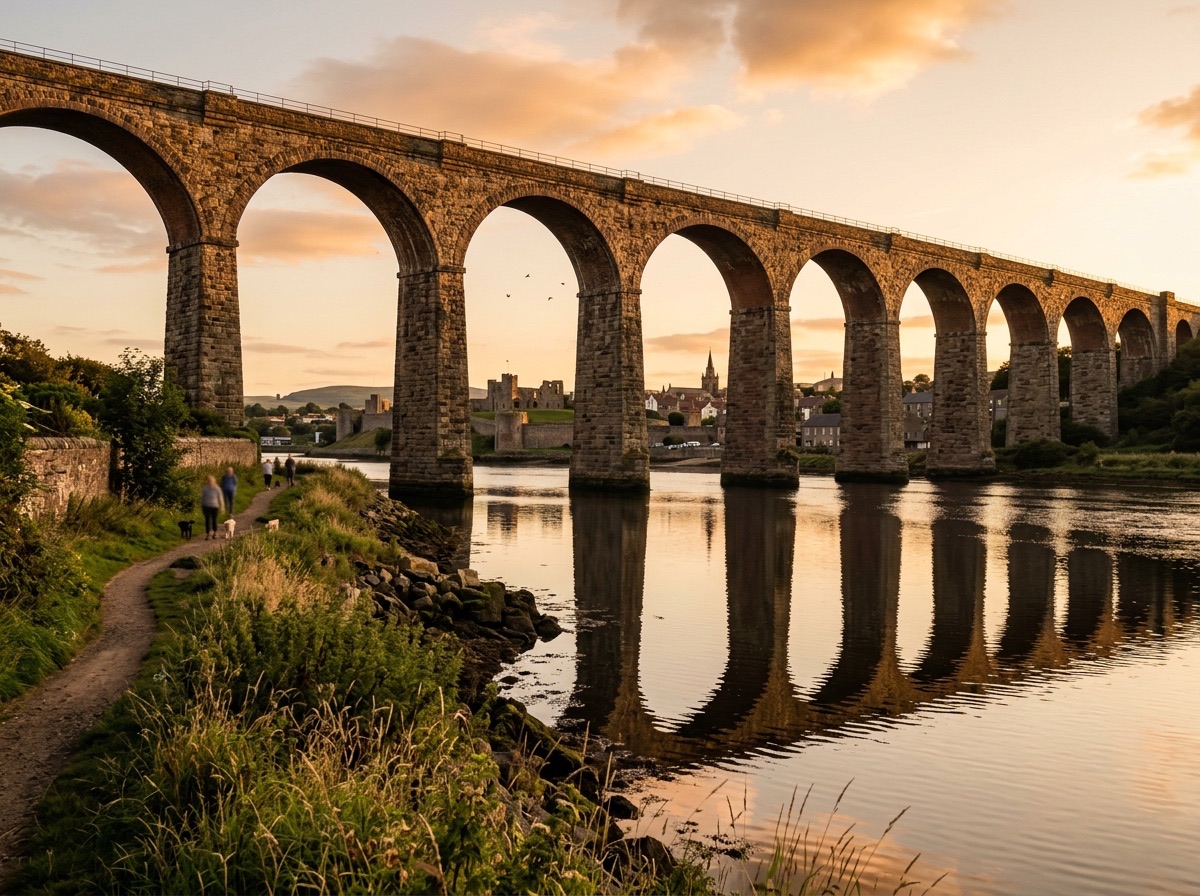
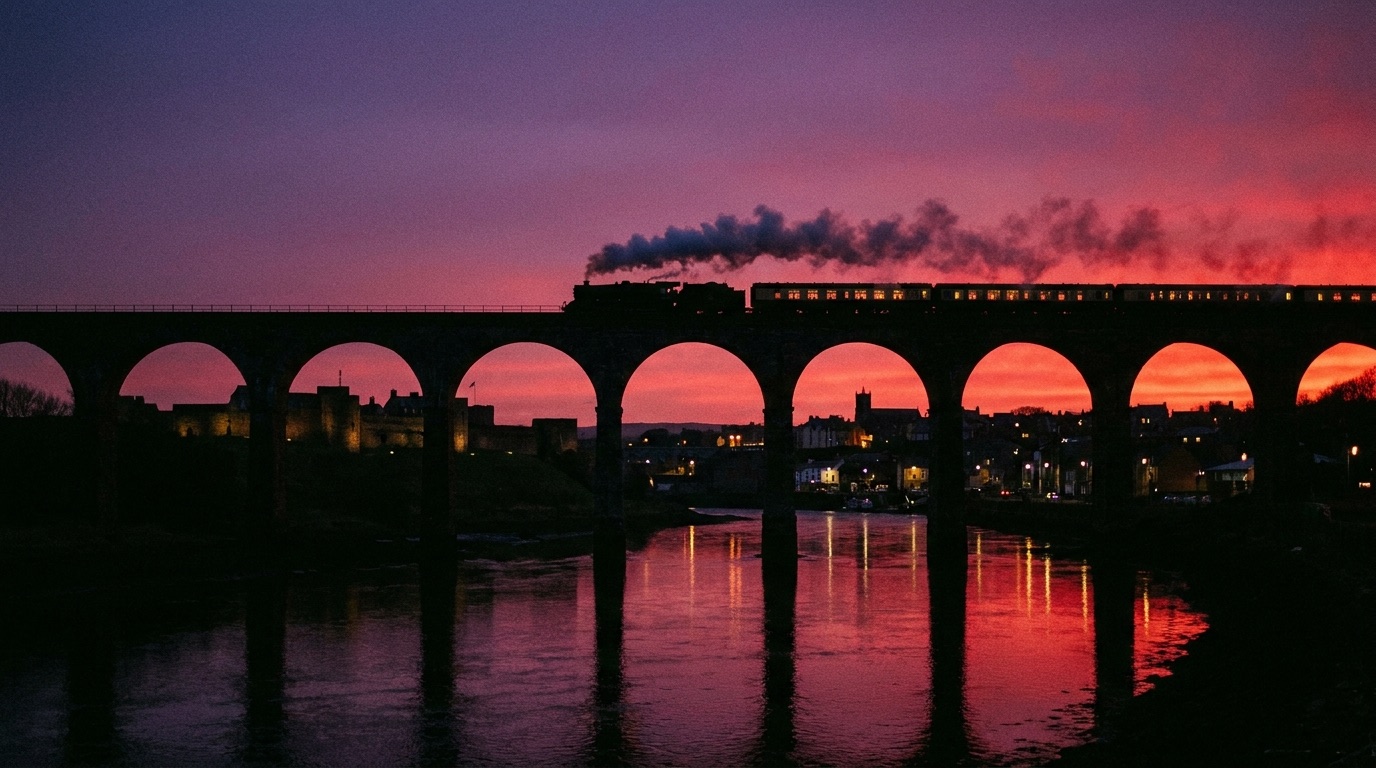
Robert Stephenson's Grade I listed viaduct carries the line high above the River Tweed, marking the crossing from Scotland into England.

Rising above the River Wear on the viaduct approach into Durham, this Norman cathedral is a UNESCO World Heritage Site — one of the best views of the whole journey.
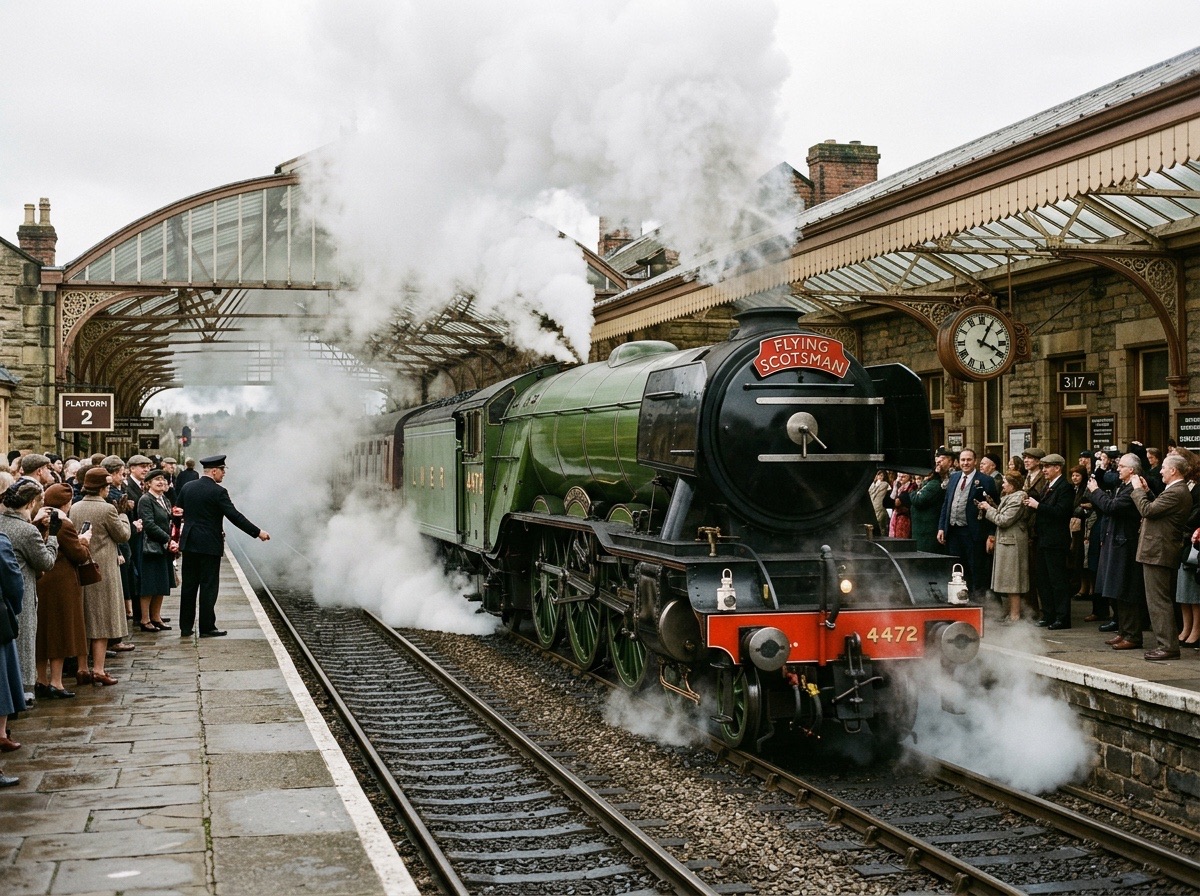
The historic non-stop London–Edinburgh express dates to 1862, later immortalised by the locomotive of the same name — still one of Britain's most famous trains.
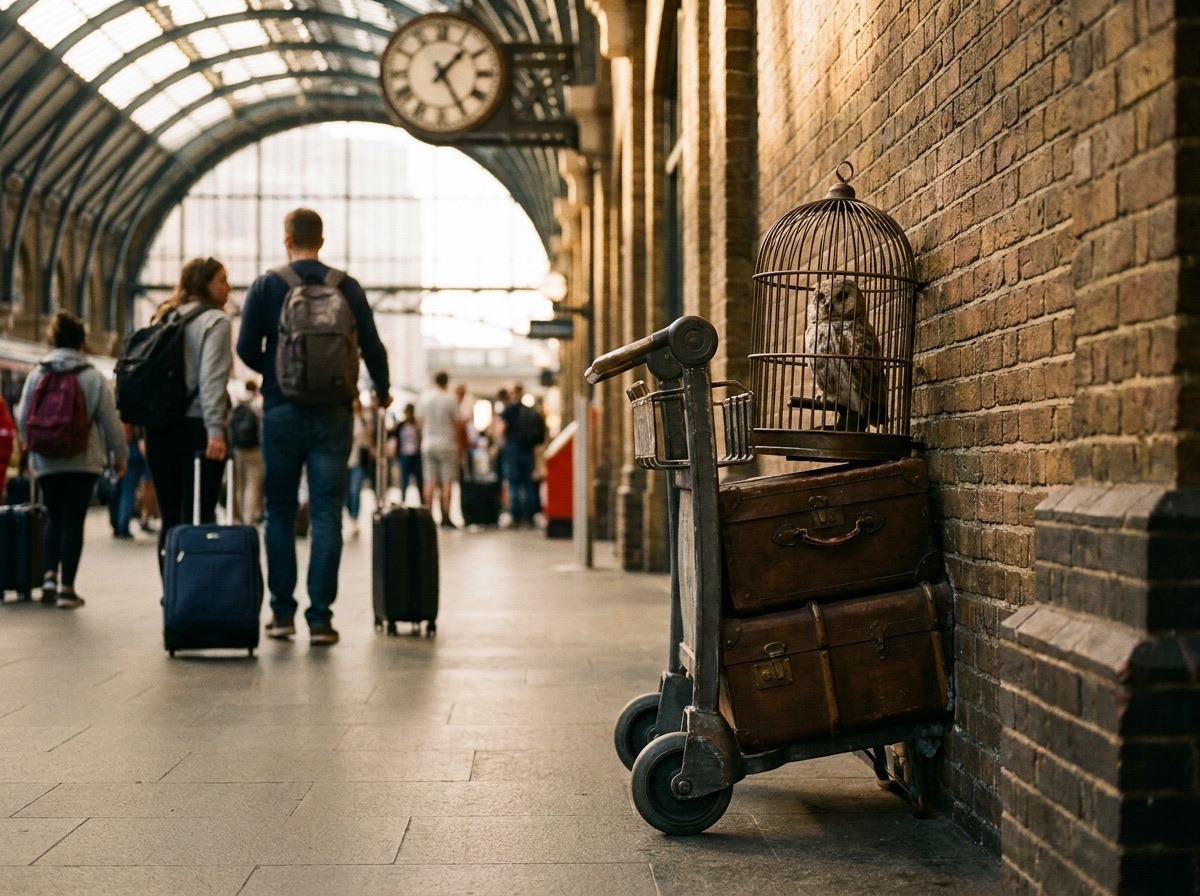
A whimsical half-vanished luggage trolley built into the station wall — one of King's Cross's most photographed spots, worth a quick detour before you board.
Know before you go
Operators
Four train companies cover this route between them — LNER's fast direct East Coast service, Lumo's budget open-access alternative, the Caledonian Sleeper's overnight cabins, and Avanti West Coast's alternative via the west. Most trains run with Wi-Fi and a buffet car as standard; check National Rail for live times across all four.
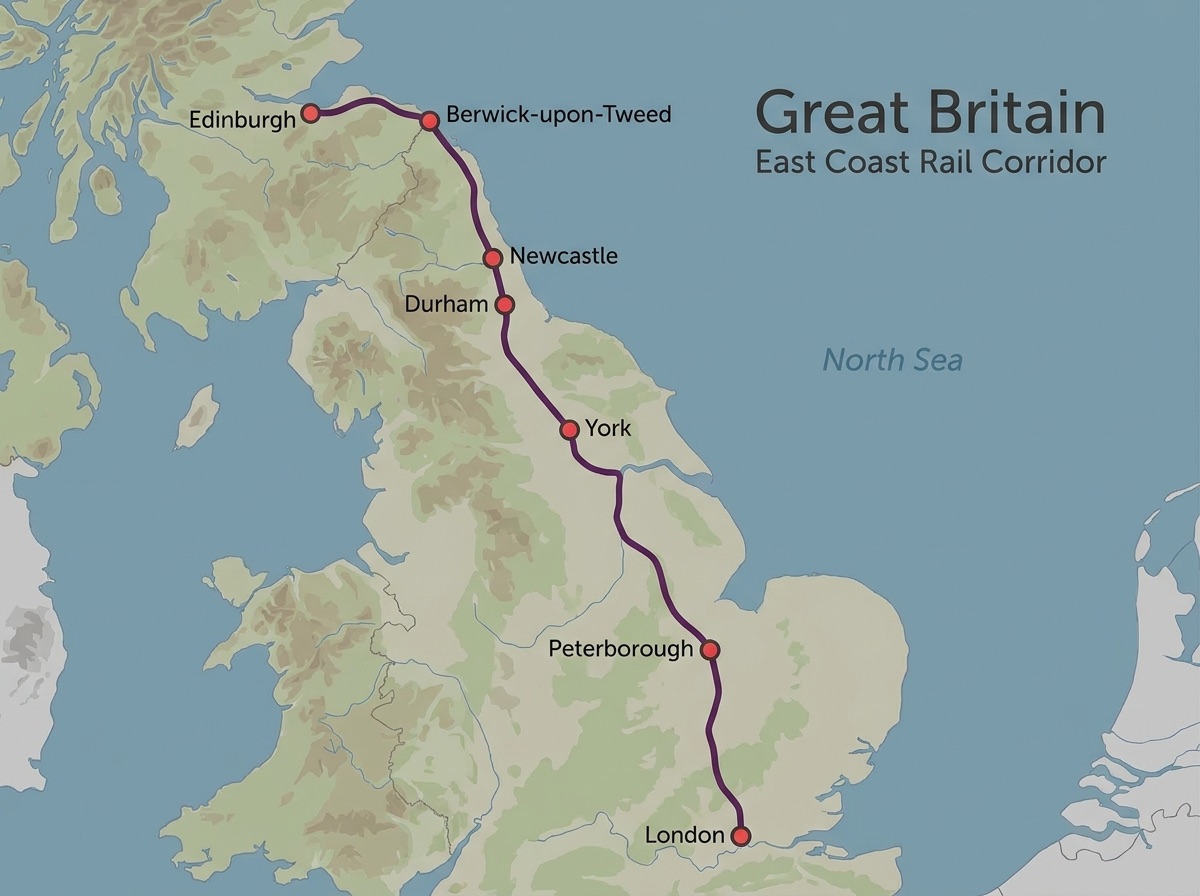
Tap a stop for what you'll see there. Drag to pan; pinch, Ctrl/Cmd + scroll, or use +/− to zoom in.
Runs the fast, frequent direct service between Edinburgh Waverley and London King's Cross aboard its Azuma fleet, in Standard and First Class.
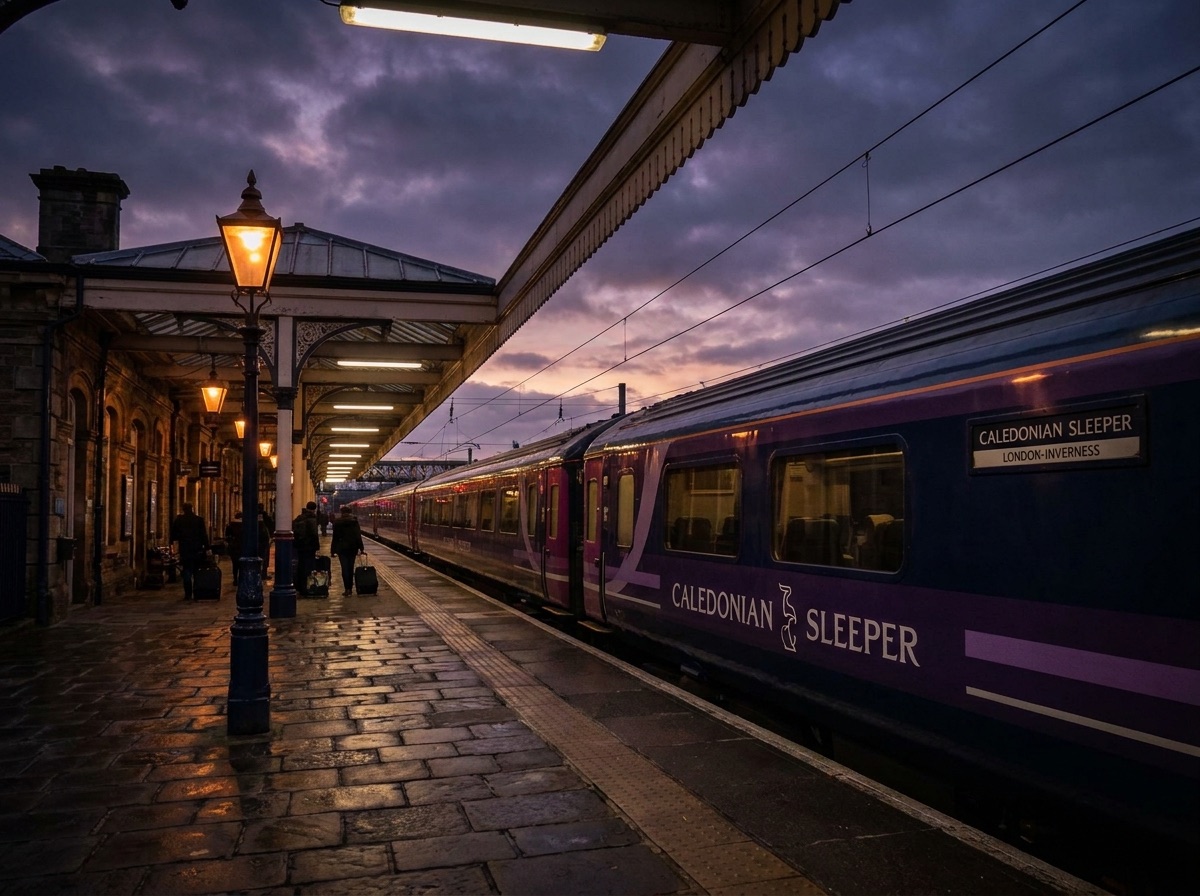
Operated by Serco, the overnight Lowlander service links Edinburgh and London Euston most nights, in a reclining seat or a private cabin.
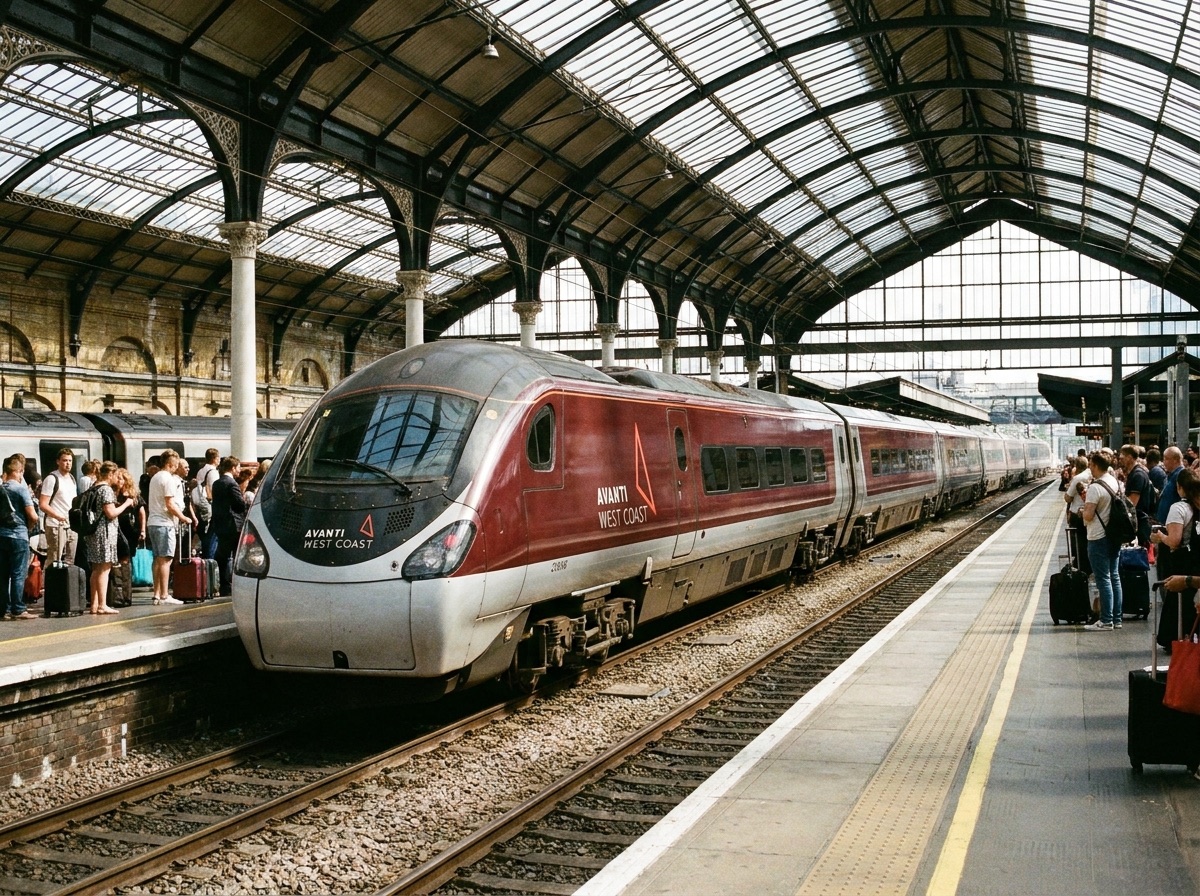
Runs a handful of direct Edinburgh–London Euston services daily via the West Coast Main Line — a useful alternative when the East Coast is disrupted. A few less-direct itineraries route via Birmingham New Street or Preston instead.
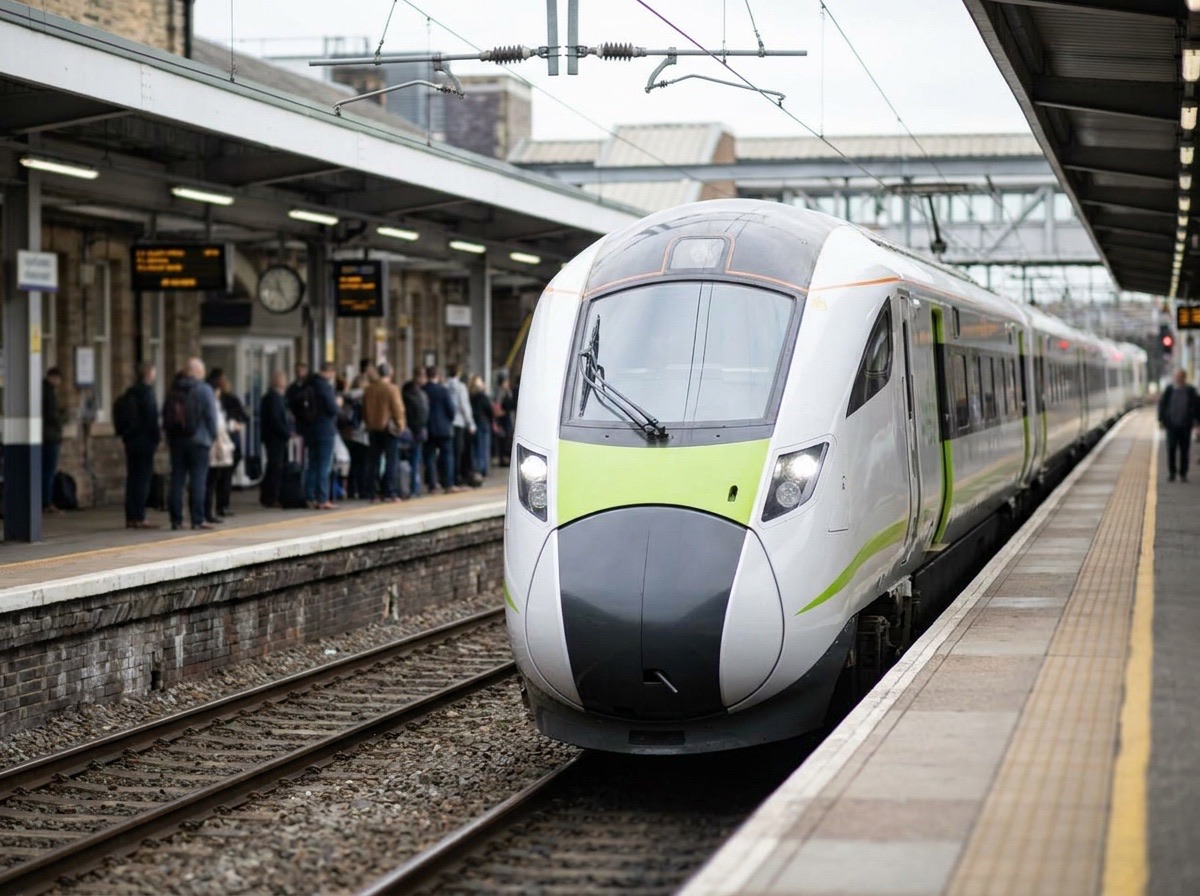
A budget-friendly, all-electric, fully digital open-access operator running its own direct trains on the same East Coast Main Line tracks as LNER — no physical tickets, no first class, but often the cheapest fares on the whole route.
Seat & Cabin Classes
From a Standard Class seat to a private sleeper cabin, the class you choose shapes the whole trip — especially if you're travelling overnight.
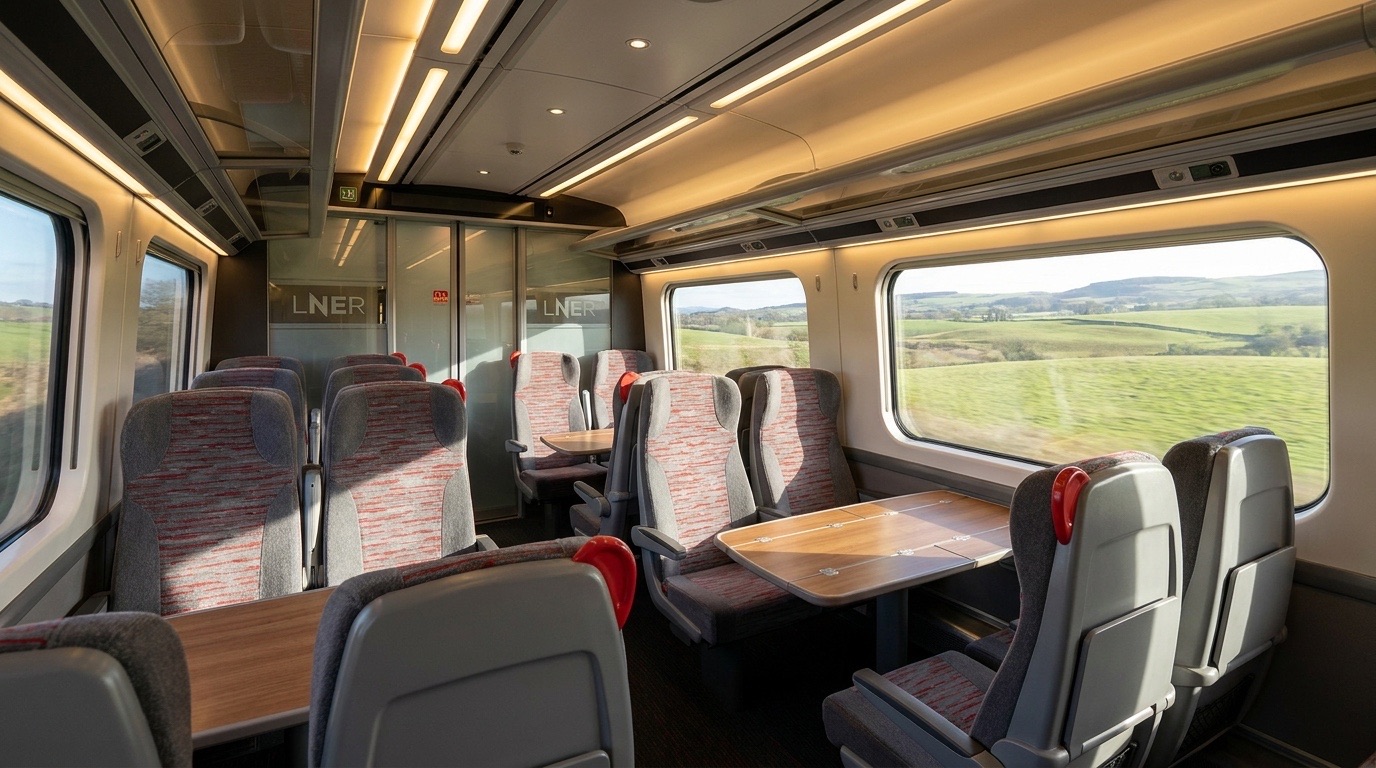
Reserved 2-2 seating with a fold-down table and plug sockets — comfortable, good value, and the default choice for most travellers.
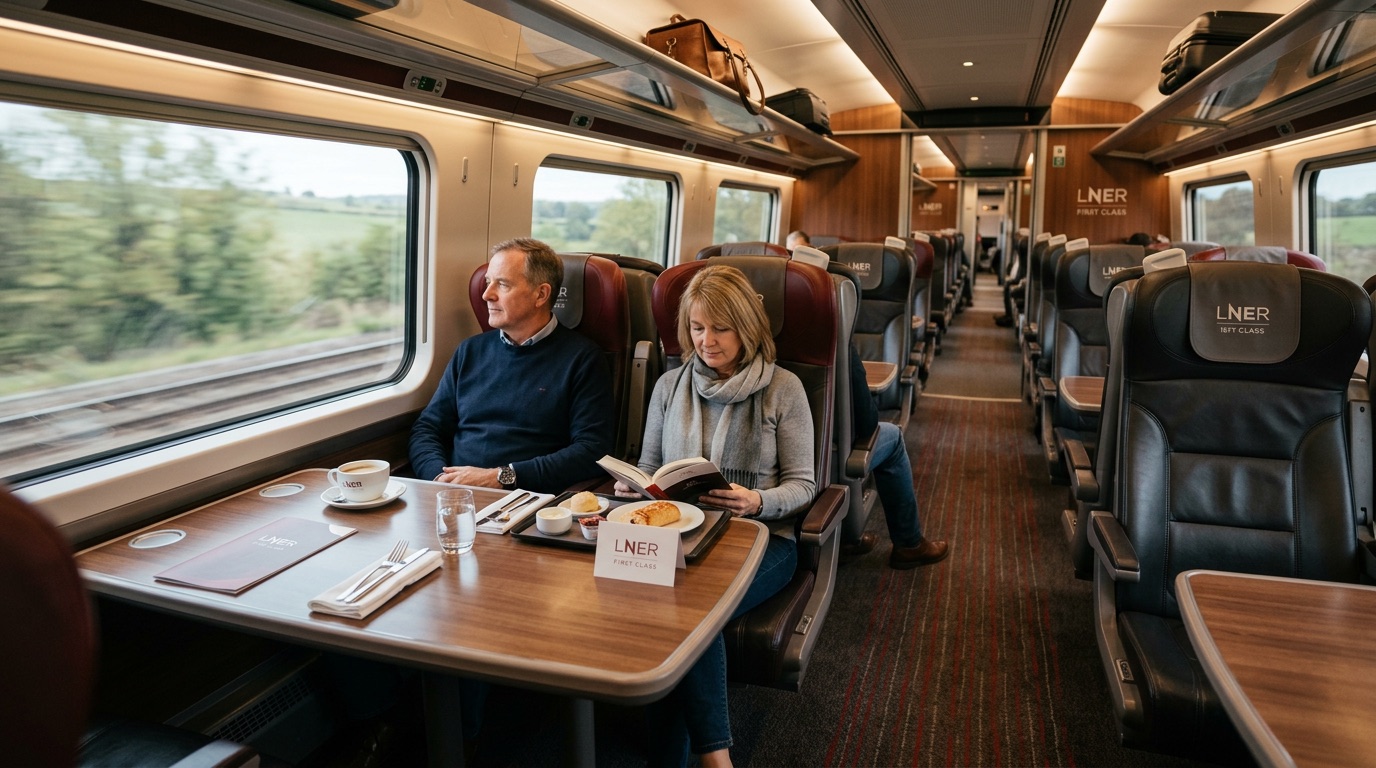
Wider 2-1 leather seating with more space than Standard, complimentary at-seat food and drinks, and a noticeably quieter carriage for the full 4-hour run.
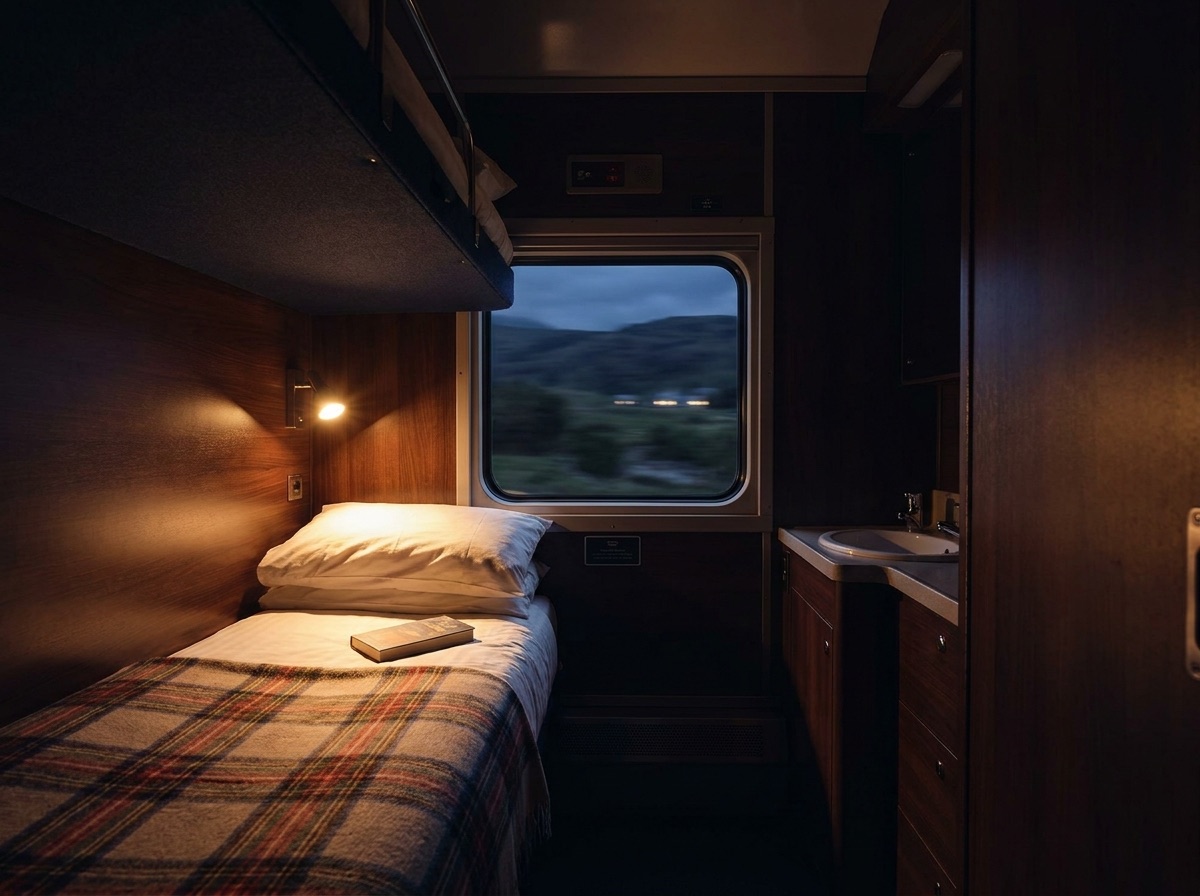
Four classes in total: a reclining Seated Coach (also called Comfort Seat), a shared-washbasin Classic Room, an en-suite Club En-Suite, or the Caledonian Double — the only double-bed cabin on a European sleeper train.
Lumo keeps it simple — Standard Class only, with reserved 2-2 seating and no First Class or sleeper option. There's no paper ticket either: your ticket and boarding pass live entirely in the Lumo app.
Train Stations
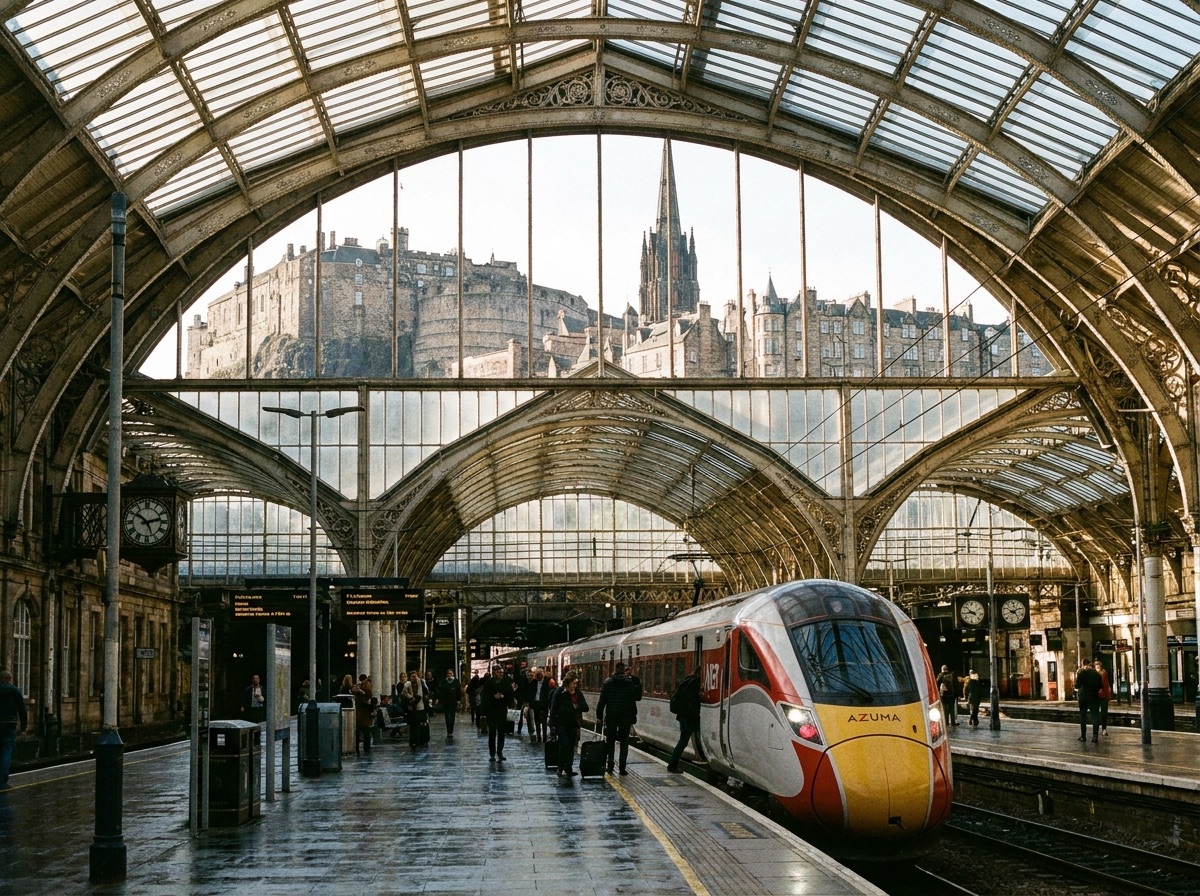
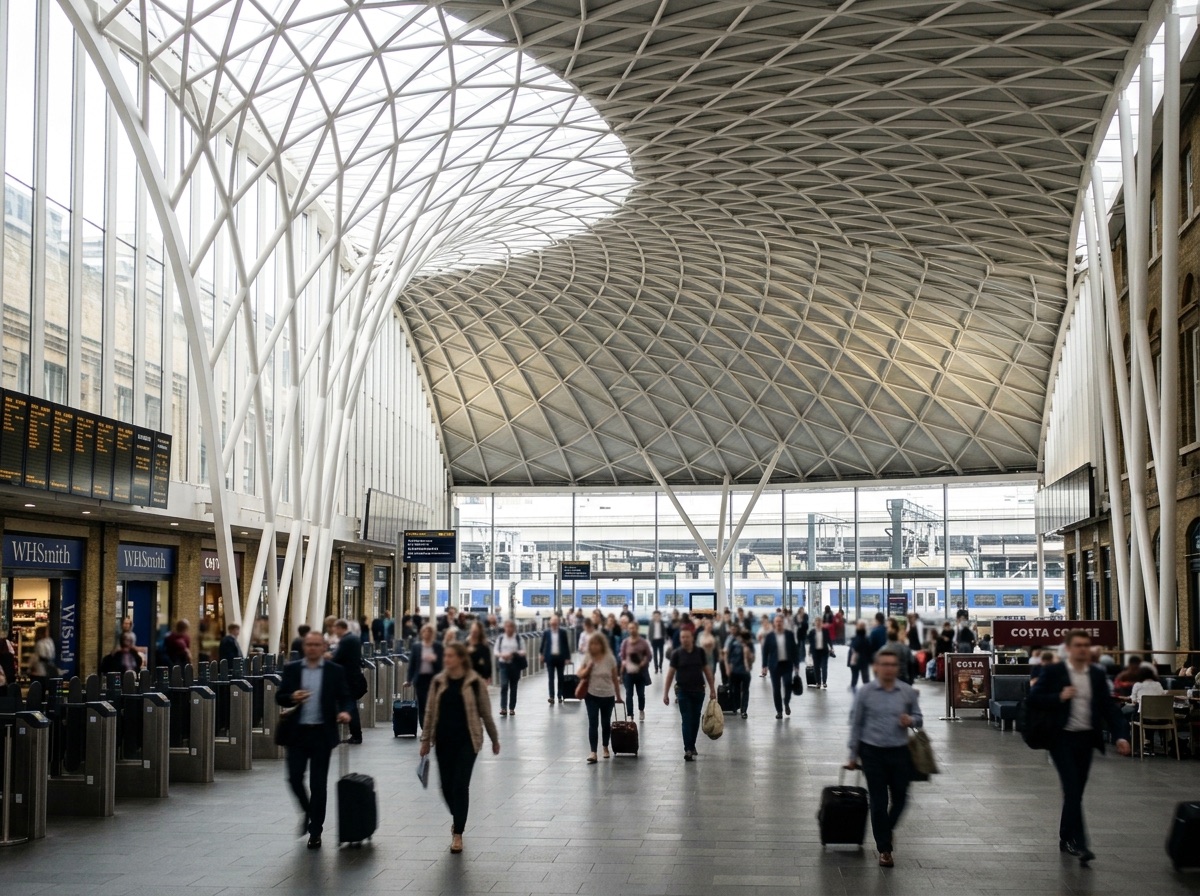
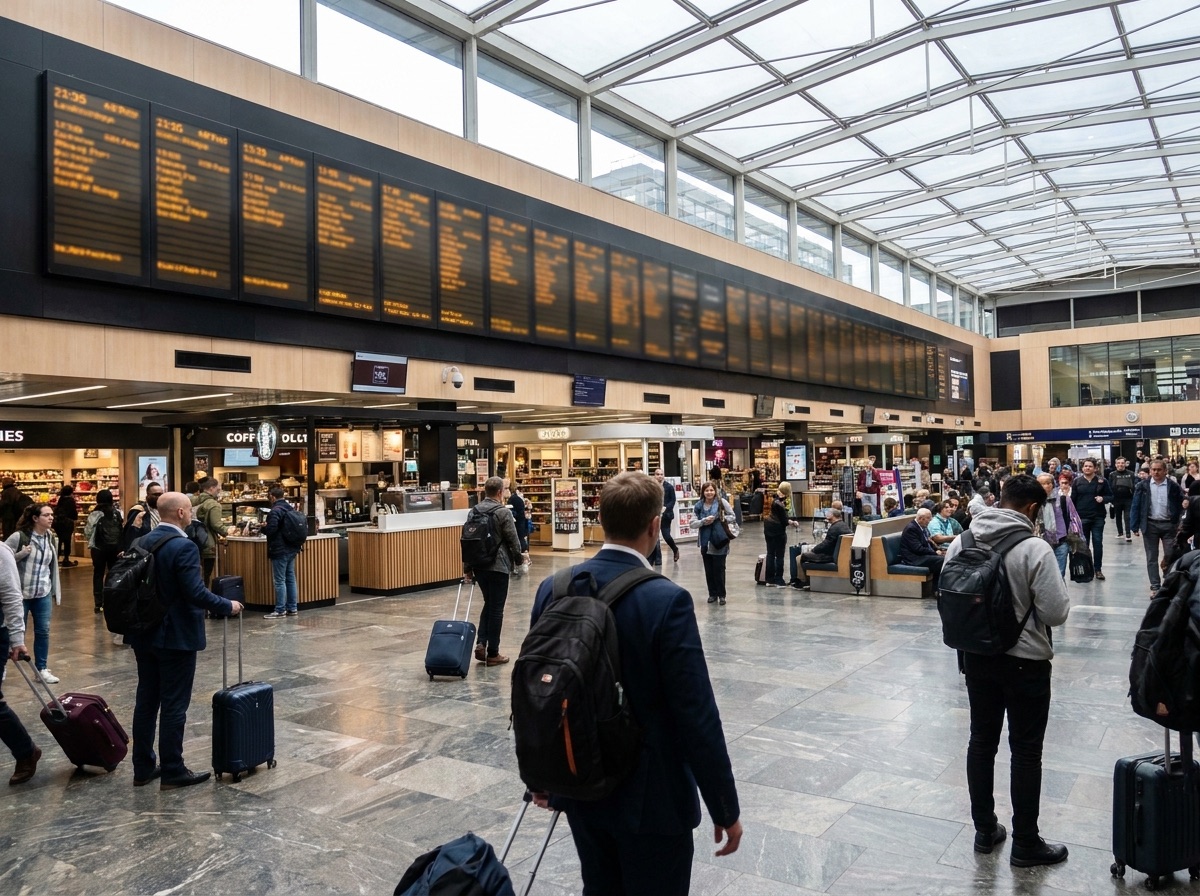
One departure station, two possible arrival stations in London — worth checking which one gets you closer to your final destination before you book.
The Journey
Travelling by train from Edinburgh to London is a scenic city-centre-to-city-centre journey. Here's a quick primer on the East Coast Main Line — how it came to be, what you'll actually see out the window, and why the Edinburgh–London run is one of Britain's great intercity journeys rather than just a way to cover ground.
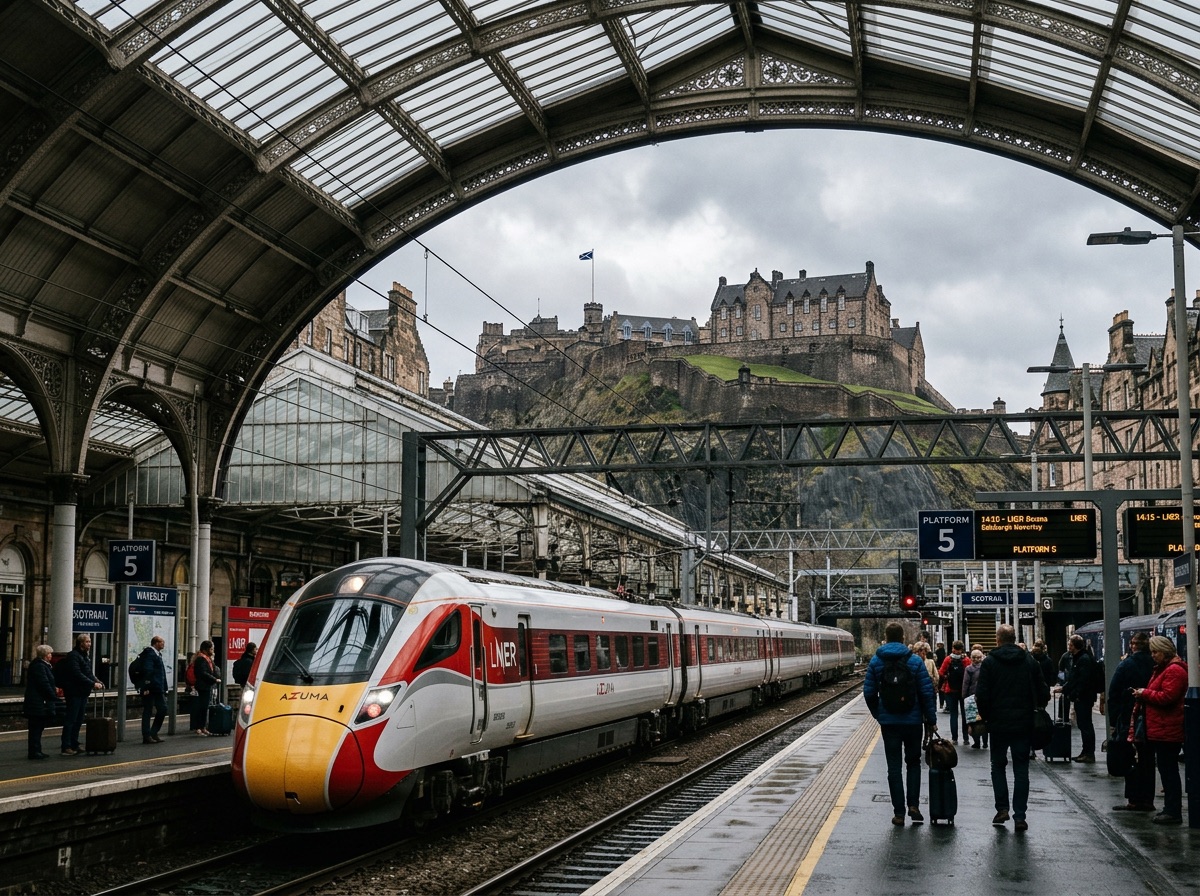
The East Coast Main Line has connected Edinburgh and London since the 1850s, and it remains one of the two great trunk routes across Great Britain — the fast, coastal counterpart to the West Coast Main Line further inland. Edinburgh Waverley itself sits in a dramatic sandstone hollow directly beneath Edinburgh Castle, making the start of the journey as memorable as anything further south.
Today's Azuma trains, run by LNER, cover the 393 miles (632 km) between the two cities in around 4 hours 10 minutes at their fastest — the direct journey from Edinburgh to London takes barely a quarter of what the trip would have taken when the line first opened.
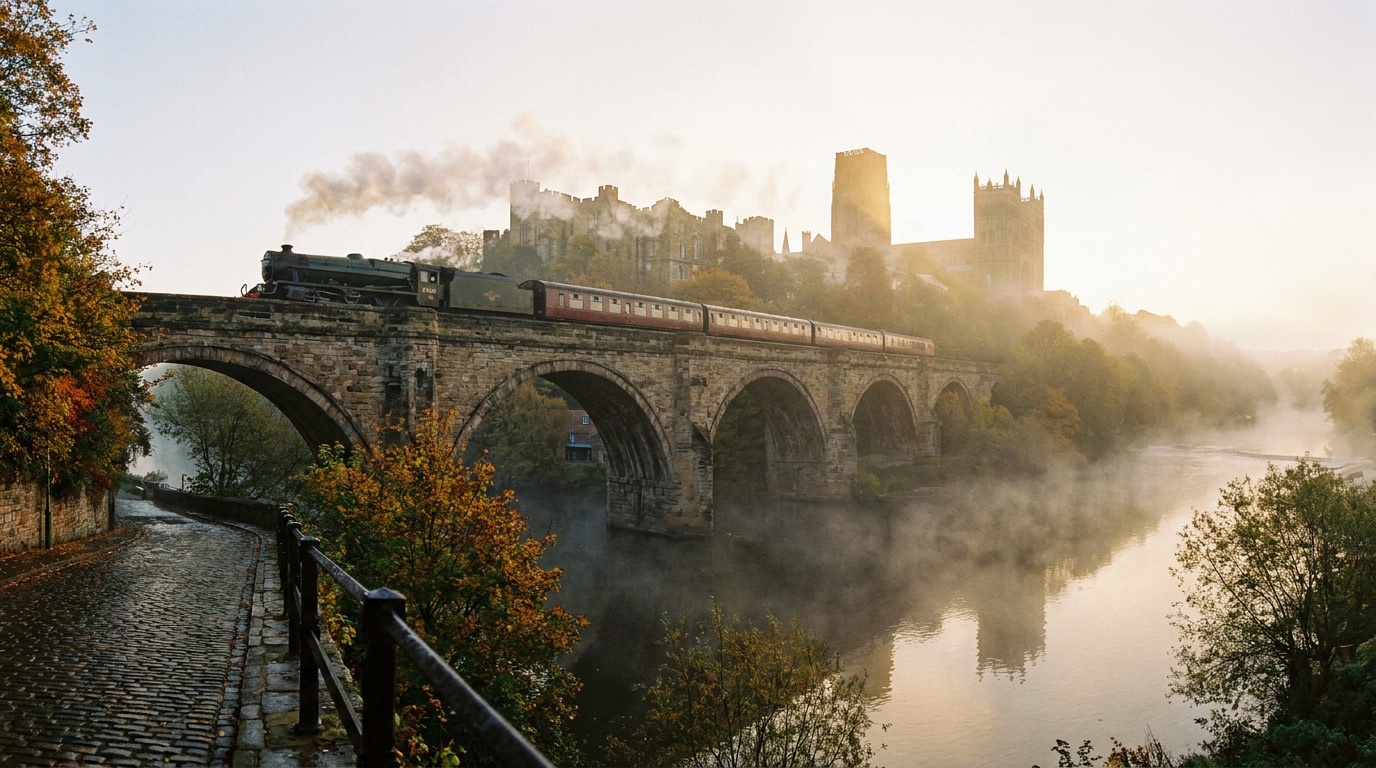
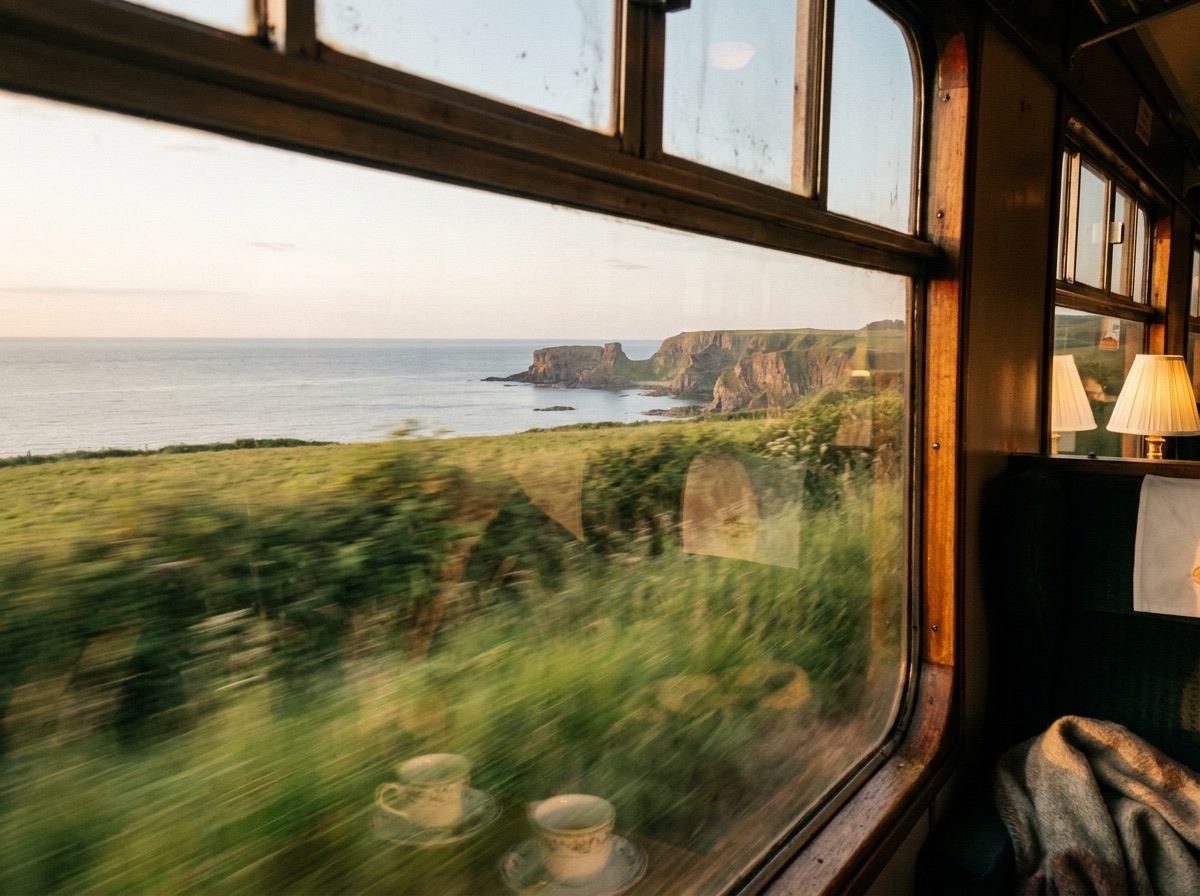
This is genuinely one of England's best window-seat journeys. Heading south from Edinburgh, the line crosses the Royal Border Bridge into Berwick-upon-Tweed, then hugs the Northumberland coast with open sea views for several miles — look left for the North Sea, right for rolling farmland. Further south, the approach into Durham crosses a high viaduct with Durham Cathedral and Castle rising directly above the tracks, before the train crosses the River Tyne into Newcastle.
York, Doncaster and Peterborough follow before the final run into London — each a reminder that this line was built city to city, not just endpoint to endpoint.
For the window-seat view, sit on the left-hand side heading south from Edinburgh (or the right-hand side heading north) to catch the Northumberland coastline and Lindisfarne in the distance. It's a small detail that makes a real difference on a clear day.
Compared with the roughly 1-hour-20-minute flight between the two cities, the train takes longer in the air but usually wins once airport transfers are counted — and it drops you in the centre of both cities, not on the outskirts.
Practical Tips
A little planning turns a good trip into a great one, especially for people travelling with children, pets or extra luggage. Advance tickets are typically released 10 to 12 weeks ahead and get pricier as popular departures sell out, so booking early is the single biggest lever on price. You'll get an email to confirm your booking, but always double-check your exact departure time the day before you travel.
Advance singles can start from around £30, a fraction of an anytime walk-up fare — but they're tied to a specific train and usually non-refundable.
If your dates are flexible, off-peak and super off-peak tickets can undercut advance fares on quieter departures.
On some dates, splitting the journey into two tickets at an intermediate station works out cheaper than one through-fare — worth a quick check before you buy.
A Railcard can save up to a third on most fares for this route, and pays for itself after just one or two trips.
LNER and Lumo arrive at King's Cross; the Sleeper and Avanti both use Euston. They're not walking distance from each other.
Heading south from Edinburgh, left-hand seats catch the Northumberland coastline near Berwick-upon-Tweed.
The first direct train of the day leaves Edinburgh around 05:40, and the last train departs around 19:58 — handy for bookending a day trip.
If you want a private cabin rather than a Seated Coach on the Caledonian Sleeper, book several weeks ahead, especially at weekends.
Well-behaved pets travel free in Standard and First Class on LNER, Lumo and Avanti (up to two per passenger); the Caledonian Sleeper allows up to two pets in private rooms for a £30 fee.
Seat reservations are recommended for long journeys between Edinburgh and London — they're included free with most tickets, so there's little reason to skip one.
Amenities
The onboard experience varies by operator and class, but here's what to expect across the route.
Free Wi-Fi across LNER's and Lumo's fleets for the whole journey.
An at-seat trolley and shop car — or order food to your seat via the operator's app.
A UK plug socket and USB port at every seat on LNER's and Lumo's trains.
Lumo tickets and boarding passes live entirely in the app — no paper ticket, no ticket machine required.
Fold-down beds and en-suite showers in the Caledonian Sleeper's higher cabin tiers.
Wide windows make the most of the Northumberland coast and Durham Cathedral views.
Designated quiet coaches available on LNER's Standard and First Class.
Bicycles require a free advance reservation in the handful of dedicated bike spaces on LNER services.
Accessible rooms and accessible toilets are available across LNER, Avanti and the Caledonian Sleeper; assistance dogs travel free in any class, and special assistance can be booked ahead at the station. Children under 5 travel free with an accompanying adult.
Air conditioning runs throughout LNER's, Lumo's and Avanti's fleets, whatever the weather outside.
Dedicated spaces for prams and pushchairs are available on request — worth mentioning when you book.
Every train on this route has onboard toilets, including accessible facilities with baby-changing space.
Why Trust This Guide
We're not owned by any train operator — every option, including flying and driving, is covered honestly.
Bookings are handled by High-Speed Trains, an established independent rail-ticketing service.
Payment and personal details are handled entirely by the operator's own secure checkout.
Booking windows, the right London station, luggage rules — the details that actually affect your trip.
FAQ
Still deciding between operators, classes, or a night on the sleeper? These are the questions travellers ask most before booking.
Book tickets ↗The fastest direct LNER service on the East Coast Main Line covers the 393 miles (632 km) between Edinburgh Waverley and London King's Cross in around 4 hours 10 minutes, with most direct trains taking 4 hours 20 minutes to 4 hours 30 minutes.
Across every operator and class, including the overnight sleeper, the average journey time works out to around 5 hours 34 minutes — but the fastest direct LNER and Lumo trains cover the route in around 4 hours 10 minutes to 4 hours 45 minutes.
Across LNER, Lumo, Avanti West Coast and the Caledonian Sleeper combined, well over 30 trains connect Edinburgh and London every day, with LNER alone running around 18 direct daily services.
The first direct train of the day leaves Edinburgh Waverley at around 05:40, and the last direct train departs at around 19:58 — useful to know if you're planning a long day trip to London and back.
Yes. The East Coast Main Line hugs the Northumberland coast near Berwick-upon-Tweed, crosses the Royal Border Bridge, passes Durham Cathedral on its viaduct approach into Durham, and crosses the River Tyne into Newcastle — genuinely one of England's best window-seat journeys.
Yes — the Caledonian Sleeper departs Edinburgh Waverley at around 23:40 most nights of the week and takes about 7 hours 35 minutes overnight to London Euston. It offers four classes: a reclining Seated Coach, a shared-washbasin Classic Room, an en-suite Club En-Suite, and the Caledonian Double, the only double-bed cabin on a European overnight train — room service breakfast is included in the two higher tiers, and up to two pets can travel with you in a private room for a £30 fee.
LNER's direct East Coast Main Line service arrives at London King's Cross. The Caledonian Sleeper and Avanti West Coast's West Coast Main Line service both arrive at London Euston instead, so it's worth checking which station suits your onward plans.
LNER and Lumo both run frequent direct trains with no change required, roughly hourly across the day. Avanti West Coast also runs some direct Edinburgh–London Euston services via the West Coast Main Line, though a few of its itineraries involve a change at a station such as Preston, Carlisle or Birmingham New Street.
The flight itself is shorter, at around 1 hour 20 minutes, but once airport check-in, security and transfers into both city centres are added, total door-to-door time is often similar to or longer than the roughly 4-hour-20-minute train — which also arrives directly in the centre of both cities.
Advance-purchase fares booked several weeks ahead are by far the cheapest way to travel, sometimes from around £30 one way, compared to walk-up fares that can run well over £150. Advance tickets are tied to a specific train and are usually non-refundable.
Advance tickets are typically released around 10 to 12 weeks ahead of travel and get more expensive as the departure date and popular time slots sell out, so booking several weeks ahead usually secures the lowest fares.
Yes. LNER, Avanti West Coast and the Caledonian Sleeper all allow generous standard luggage allowances with overhead racks and dedicated luggage racks near carriage doors, with no strict weight limits for typical intercity travel.
Compare operators, classes and dates, then book securely through our trusted partner.
Book Tickets ↗